
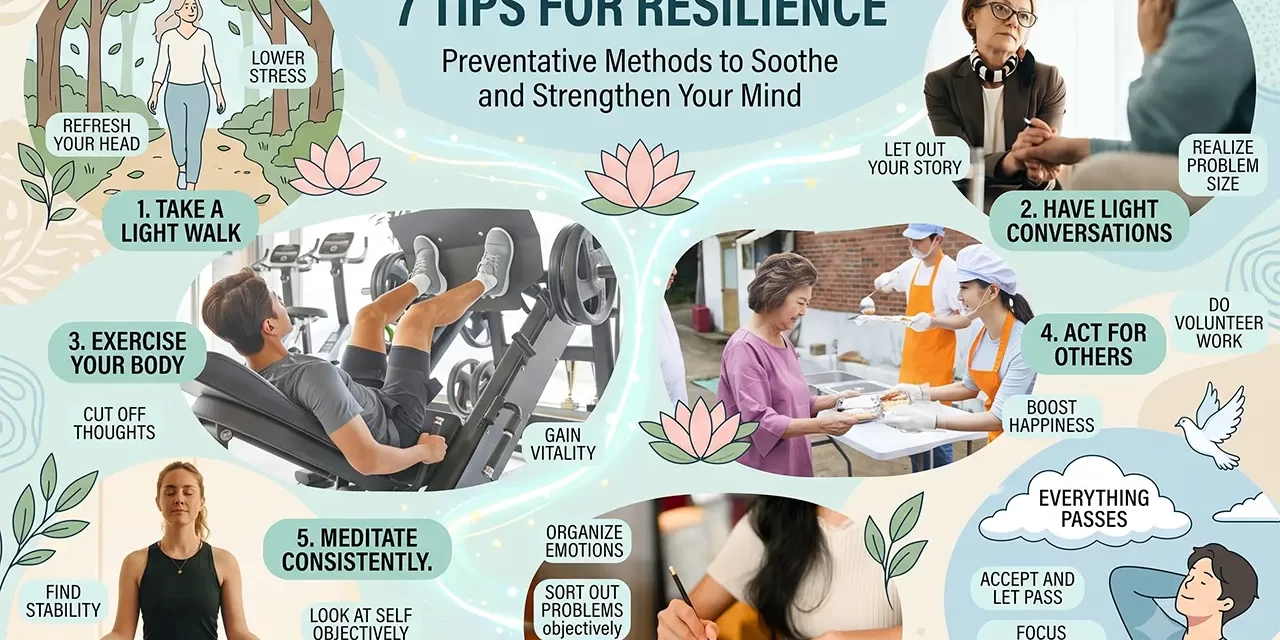
Welcome back to the Santa Clara Meditation blog! 🌱
While living life, everyone faces times when they feel exhausted, empty, and find life hard to endure at least once. Just as there is a saying about the “joys and sorrows of life,” life doesn’t always consist only of joyful and happy events.
When life is exhausting and difficult, what kind of words do you most want to hear?
- Words of comfort and empathy that soothe your mind?
- Practical solutions that can immediately resolve the problem in front of you?
- A positive mindset that can shift your perspective?
The answer will, of course, vary depending on a person’s disposition. But the important thing is that, undoubtedly, we can overcome these difficult situations through several methods.
We hope you gain even a little strength through this article and successfully overcome your difficult times! 🕊️
🌿 Tips to Overcome When Life is Exhausting and Difficult
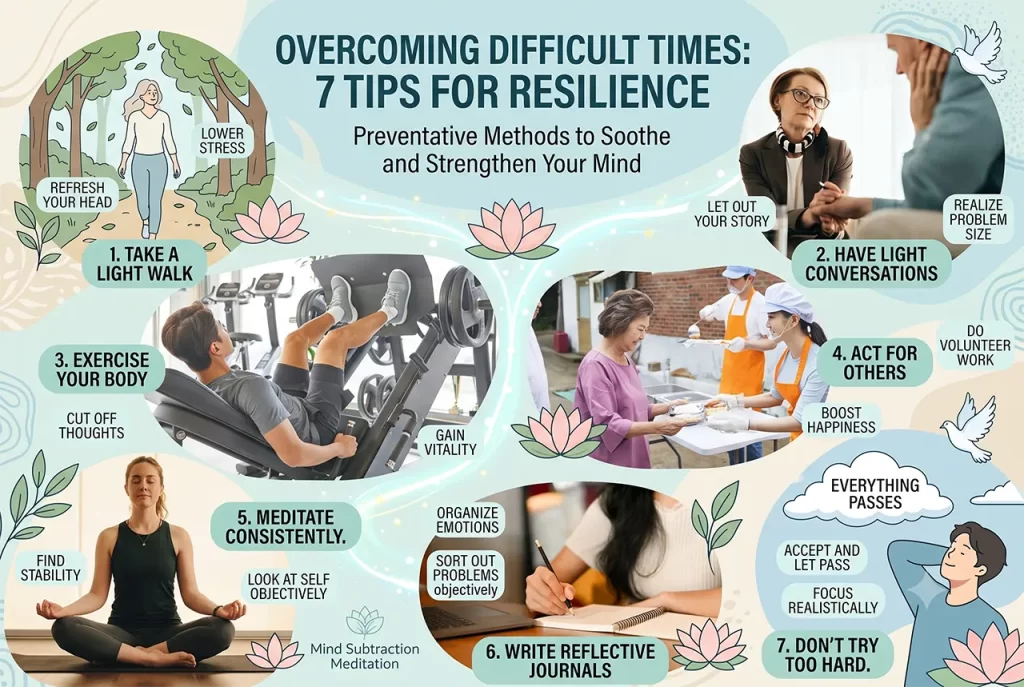
1. Walking 🚶♀️
When your head is too complicated, taking some time to walk lightly around your home or workplace can have a refreshing effect. It means stepping away from the same people and the same places you encounter every day.
As you move to a new space and take a light stroll, you can escape your exhausting daily life, refresh your mood, and feel the negative thoughts that were filling your head suddenly becoming lighter.
In fact, walking relaxes our bodies and lowers stress levels, allowing for effective stress management. Walking for about 30 minutes a day is generally helpful. It is said that when you walk at a normal pace for about 10 minutes, your brain can rest and organize complex thoughts on its own. As such, walking is a great way not only to take care of your physical health but also to escape your complicated daily life and rest.
2. Having Light Conversations ☕
It can also be helpful to casually bring up your story to close acquaintances. When you kept it inside without speaking, it felt like an incredibly massive problem. But once you actually talk about it, you may realize it wasn’t as big of a problem as you thought.
If it is difficult to talk to acquaintances around you, you can visit a nearby counseling center (local welfare centers also have free counseling windows) or a meditation center to receive counseling and comfortably let out your story. By laying your story out to someone else, you can organize the problem yourself, and once it is organized, a solution might naturally come to mind.
3. Exercising 💪
Rather than lying still in an overly exhausting and difficult situation, it is helpful to move your body through exercise. One of the great advantages of exercising is that you can temporarily pause all sorts of thoughts while doing it.
When you exercise, your thoughts are cut off, and your body gains vitality, allowing you to escape negative emotions. It is good to go to a gym near your house or gather with like-minded people to exercise together. Exercising and socializing with others builds bonds, which can help you overcome difficult times.
Furthermore, we recommend managing your stamina through consistent exercise. If you exercise consistently, your body builds a tolerance to stress, becoming increasingly immune to it. Therefore, you can overcome stress faster than before, and your ability to manage stress improves. How about taking care of both your healthy mental fortitude and physical stamina through exercise?
4. Doing Volunteer Work 🤝
According to a 2019 report published by the UN Sustainable Development Solutions Network, people who actively participate in prosocial activities, such as volunteering, have higher levels of happiness than those who do not.
In particular, happiness increased the most when people volunteered voluntarily, in a way they wanted, helped someone they felt directly connected to, and witnessed the effects firsthand. Both the giver and the receiver of help experienced increased autonomy and a sense of social solidarity. This strengthened social cohesion and instilled a sense of stability in community members, greatly contributing to creating a happy society.
It doesn’t have to be a grand gesture. Even small, trivial tasks in daily life are enough, as long as it is something you want to do and it helps the other person. Holding the hand of an elderly woman walking precariously down a hill and walking with her; doing the dishes and laundry for a housemate who can’t manage their daily life due to excessive workload; making a delicious and simple fried rice for a younger sibling who doesn’t even have time to eat due to endless meetings… The things you can do for others in daily life are endless.
Even if it is trivial, the act of helping others changes you positively and makes you happy. If you are going through a hard time in life right now, try acting for someone other than yourself at least once. Before you know it, you will discover a brighter version of yourself. (Source: The Wisdom of Denmark, Building a Happy Society through Volunteering)
5. Meditating 🧘♀️
When your mind is exhausted and struggling, especially mentally, try meditating. Meditation has the effect of relaxing our bodies and minds and relieving stress. Even just meditating for a short moment regulates your heartbeat, stabilizes your body, and reduces stress.
When stress is relieved and you find stability through meditation, you naturally become able to look at your inner self objectively. As a result, you can wisely solve the problems you are trying to tackle on your own. If you meditate consistently, you change positively, and your ability to manage stress becomes exceptional, allowing you to overcome difficult situations much faster than when you weren’t meditating.
There are countless types of meditation, but Ma-eum Su-ryun (Mind Subtraction) meditation is helpful because it allows you to discard your exhausted mind and its root causes. If you meditate consistently, the effects multiply compared to when you don’t. Also, because you can meditate together with others, you can do it more consistently than doing it alone, allowing you to experience the effects of meditation even more profoundly.
6. Writing it Down ✍️
When everything you do doesn’t go your way, you clash with everyone you meet, stress keeps piling up inside you layer by layer, and it’s so hard you feel like you might die—yet you can’t figure out why it’s so hard or how to escape it—grab a notebook and a pen and slowly start writing.
You can simply scribble down the emotions and thoughts that come to mind right now, or you can ask yourself more specific questions and write down the corresponding answers:
- What is the main reason I am struggling the most right now?
- Who is the person making things hardest for me?
- Why do I feel it is so hard in that situation?
- How long has it been this hard? …Anything is fine.
By writing a reflective journal looking back on your day every night before bed, you can organize the emotions you accumulated throughout the day, the image of yourself, and the images of the people around you.
Additionally, drawing a mind map can help organize a complicated mind. Through this process of writing things down, you become able to look at your problems more objectively. As the problems you hold are calmly sorted out, you will be able to find the appropriate solutions on your own.
7. Not Trying Too Hard ☁️
You are already doing your absolute best. You are working hard doing what you can in your position, and thanks to you, your family can live comfortably and well. Are thoughts like “I need to do better,” “I need to earn more money,” or “I need to live a more successful life” tormenting you?
When you accommodate and accept your current conditions and situation exactly as they are, you realistically focus on what you can do right now.
When you’ve tried everything you possibly can but the situation shows no sign of improving, just leave it be. Everything passes. If you don’t try too hard and just keep doing what you can in that situation, you will suddenly find that it has all passed. ✨
