
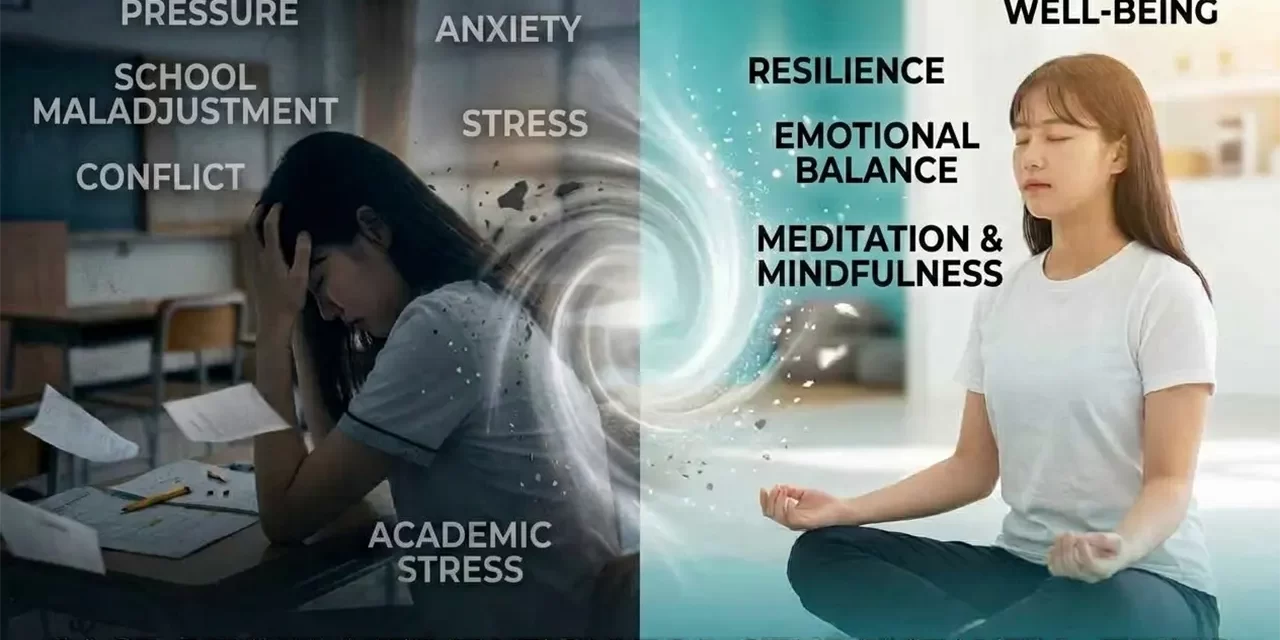
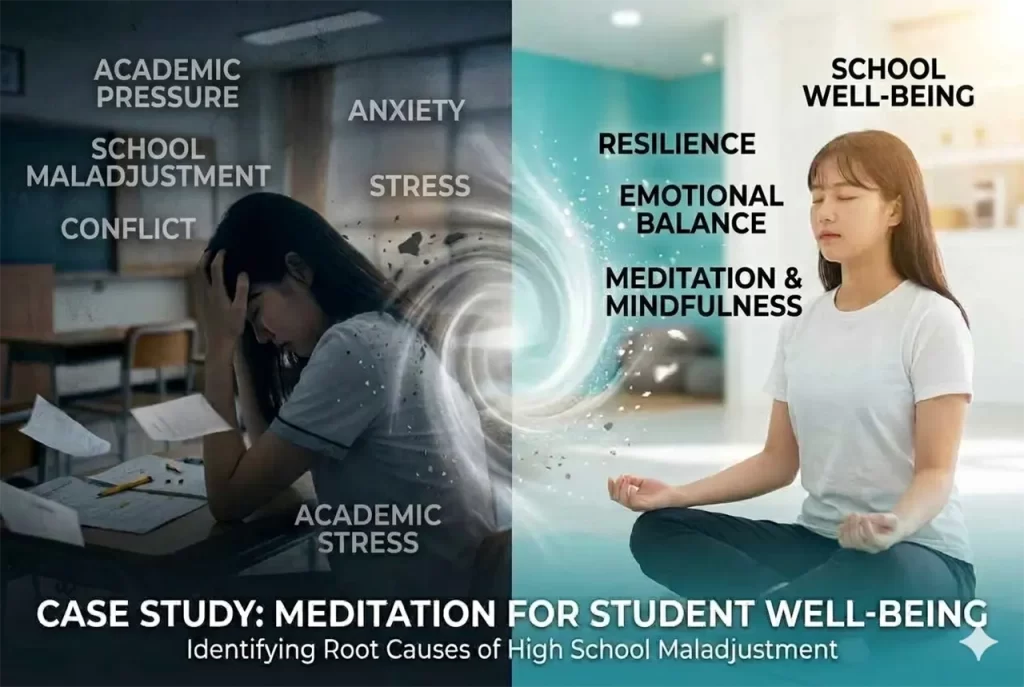
📌 Research Background: The Crisis of High School Maladjustment
In South Korea, approximately 68,000 elementary, middle, and high school students drop out annually, representing about one out of every 100 students. Among high schoolers, the rate rises to two out of every 100, with nearly half citing school maladjustment as the primary cause. Serious modern classroom issues include school violence, systemic bullying, and excessive academic stress.
While conventional alternative education programs offer temporary relief, dropout rates continue to escalate. This 2014 qualitative case study investigates a fundamental solution: the Ma-eum Su-ryun (Mind Subtraction) method. By guiding struggling students to identify the root causes of their maladjustment, observe them objectively, and systematically let them go, this framework achieves meaningful behavioral transformation within a short period.
- Researcher: Moo-Shin Kim (Teacher, Busan Sinjeong High School)
- Publication: Academic Society for Human Completion, Vol. 5 (2014)
- Core Purpose: To help students objectively reflect on their lives, identify negative inner mind states, and explore positive behavioral changes through repeated mind subtraction practice.
👥 Research Methodology and Participants
The study utilized a qualitative case-study approach, combining student/parent interviews, written reflections, questionnaires, and consultations with local meditation assistant instructors.
- Research Design: Introduction of Levels 1 and 2 of the Ma-eum Su-ryun mind subtraction method.
- 2012 Academic Year (Intensive Cohort): 4 high school seniors (2 male, 2 female students) enrolled at local Ma-eum Su-ryun centers, practicing the subtraction method for 2 to 4 months.
- 2013 Academic Year (Broad Integration):
- 5 minutes of daily mind subtraction integrated directly into English classes for approximately 120 first-year students across four classes (March–July 2013).
- Observations of 10 second-year and 15 first-year students participating in creative activity clubs and academic support groups (March–November 2013).
📊 In-Depth Qualitative Case Studies (2012 Cohort)
📝 Case 1: Student K – Severe Bipolar Symptoms and Peer Conflict
- Initial Counseling Baseline: Student K displayed severe, unpredictable mood swings associated with clinical bipolar symptoms. This made maintaining healthy relationships with peers and teachers nearly impossible. The student had undergone extensive psychiatric treatments and conventional counseling with zero meaningful improvement.
- Mind Subtraction Practice: Prenatal history revealed the student’s mother experienced intense anxiety, depression, and severe marital conflict during pregnancy, followed by a painful parental divorce during the student’s childhood. From April to September 2012 (4 months total, excluding summer vacation), Student K practiced Level 1 and Level 2 training. The student reviewed life experiences chronologically to target and discard emotionally traumatic memories and stored mental images of family difficulties.
- Final Transformation Results: The student’s facial expression became notably brighter, peer and teacher relationships stabilized, and school adaptation succeeded. Student K successfully graduated high school and achieved college admission.
📝 Case 2: Student Y – Recurrent Theft Behavior and Disciplinary Sanctions
- Initial Counseling Baseline: Student Y had a chronic history of stealing cash and valuables at both school and home. Caught stealing in April, the student received a mandatory one-week disciplinary school-service sanction. The student exhibited constant anxiety, pathological lying, and a history of failed parent-teacher consultations.
- Mind Subtraction Practice: From April to June 2012, Student Y participated in daily, one-hour after-school subtraction sessions at a nearby Ma-eum Su-ryun center. Guided by regular consultations, the student reviewed personal life experiences from birth onward, isolating and discarding the precise underlying mental images, greed, and anxiety patterns connected directly to the theft behavior.
- Final Transformation Results: No further incidents of theft occurred at school or home. The student’s chronic anxiety stabilized. Following the national college entrance examination, the student successfully worked a restaurant part-time job with zero misconduct, graduated, and adapted well to university life.
📝 Case 3: Student K – High-Risk Suicide Designation
- Initial Counseling Baseline: Although appearing superficially cheerful and academically engaged, Student K was flagged as a high-risk suicide group during both the first and second school emotional-behavioral assessments. Deep consultations revealed childhood loneliness and severe depression stemming from parental divorce and growing up isolated with a grandmother. The student’s mother had also suffered suicidal ideation during pregnancy.
- Mind Subtraction Practice: For two months (June–July 2012), the student practiced Levels 1 and 2 mind subtraction. The intervention focused heavily on isolating internal mental representations of the parents and associated abandonment trauma. School counseling was maintained concurrently to support the clearing of negative mental images.
- Final Transformation Results: Suicidal thoughts disappeared entirely. The student stated: “The world remained exactly the same, but I realized that I had been considering suicide because of the mistaken pictures stored in my mind.” The student graduated successfully and entered the College of Engineering at Pusan National University on a full scholarship.
💡 Conclusion and Educational Recommendations
Unlike superficial interventions like temporary psychiatric medication or empathy-only counseling, the Ma-eum Su-ryun mind subtraction method offers a concrete, systematic path for youth behavioral change. When students revisit memories, traces, and stored images, they uncover the root causes of their maladjustment. Through subtraction, these images lose their emotional power and disappear, stopping negative behaviors at the source.
To successfully implement these vital mental health strategies in modern schools, teachers and counselors must first receive professional mind subtraction training. By developing broader, clearer minds, educators can guide students to recognize internal negative patterns and learn practical ways to let go.
For local parents looking to cultivate this emotional resilience and school adaptability in their own children, the professional programs at Santa Clara Meditation—deeply rooted in the foundational mind subtraction principles pioneered by Master Woo Myung—provide a scientifically backed, locally accessible solution for lasting personal growth.
