
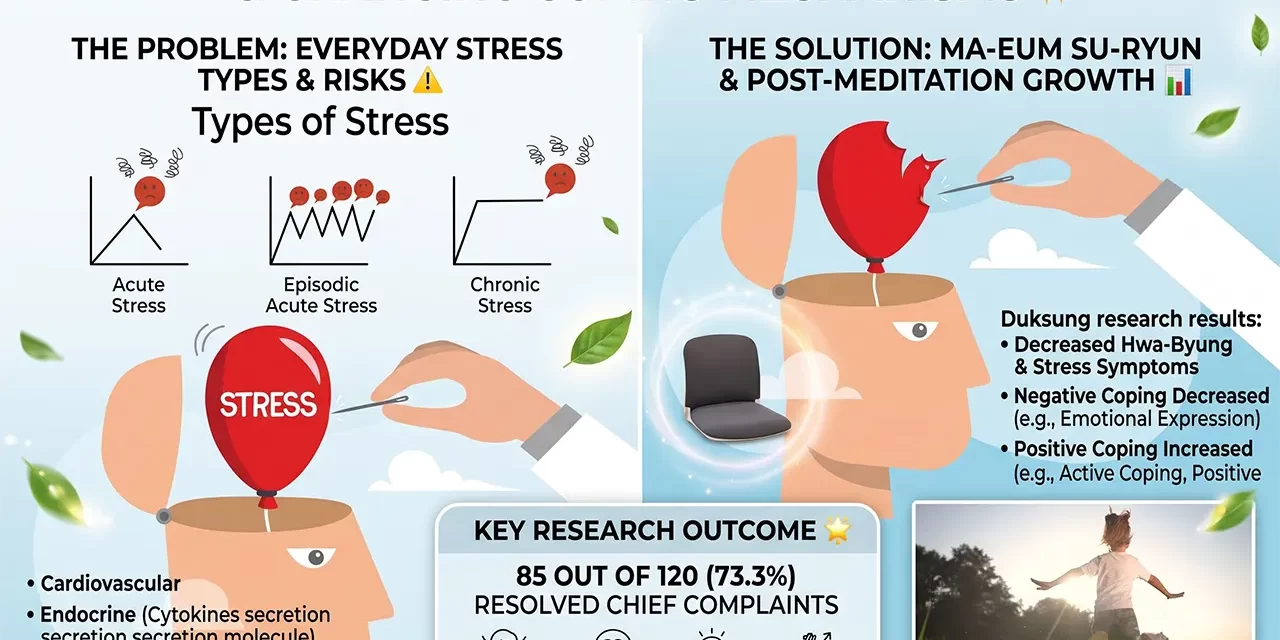
⚠️ Everyday Stress Threatens Our Body’s Health
Are there many of you struggling because of stress? At work, at school, and at home, various stressors attack us relentlessly. Anxiety about work, interpersonal relationships, and the future constantly pressures us. Especially in today’s rapid social changes and the overwhelming flood of information, our brains are in a state of continuous overload without a moment to rest.
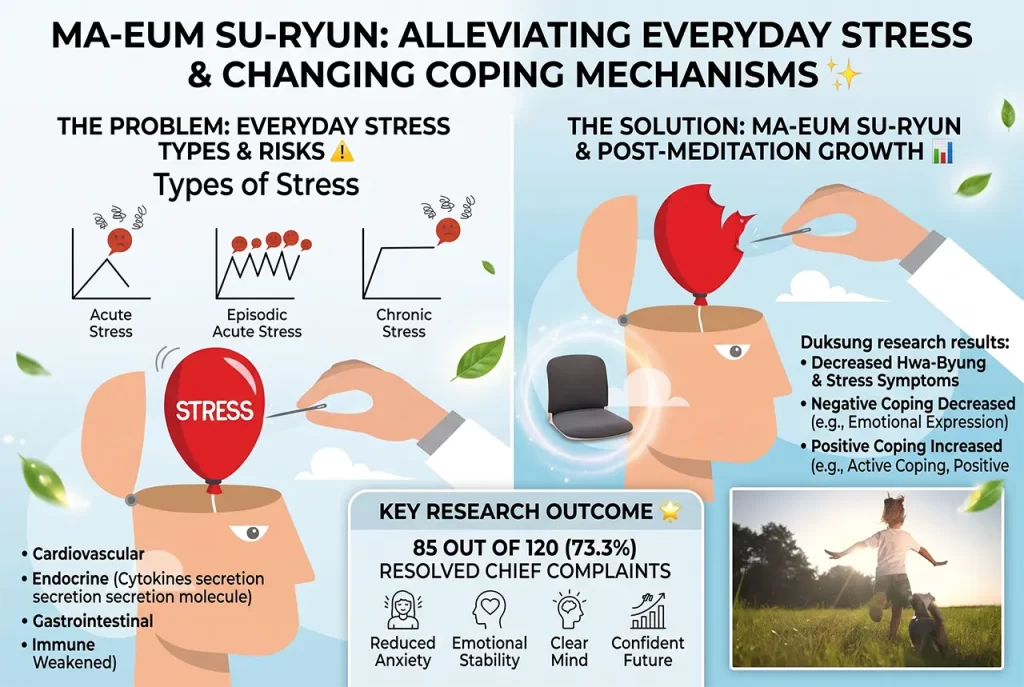
Stress goes beyond being a simple mental issue; it is a cause of various physical diseases.
- The American Psychological Association (APA) states that stress affects almost every system in the body, including the cardiovascular, endocrine, gastrointestinal, nervous, respiratory, musculoskeletal, and reproductive systems.
- Chronic stress stimulates the secretion of cytokines—hormones that induce inflammation—raising inflammation levels in our bodies, disrupting the immune system, and weakening our resistance to infections and diseases.
- When the stress hormone cortisol is excessively secreted, it induces metabolic dysfunctions, including insulin resistance and reproductive hormone imbalance.
The negative impact of stress on our bodies is truly severe, making everyday stress management absolutely essential.
🧘♂️ Meditation: The Best Stress Management Method Recommended by Global Scholars
There are various ways to manage stress, but the effective solution consistently suggested by world-renowned psychologists and neuroscientists is meditation.
- Research institutions at prestigious universities worldwide, such as Harvard Medical School, Johns Hopkins University, and Stanford University, have conducted extensive research to scientifically verify the effects of meditation on the body.
- Meditation stabilizes the amygdala—the part of the brain responsible for anxiety and tension—and activates the prefrontal cortex, which manages emotional regulation, judgment, and creativity.
- It stabilizes heart rate and blood pressure, aiding the smooth operation of the autonomic nervous system, and strengthens the immune system to increase resistance to infections and diseases.
📊 The Effects of Ma-eum Su-ryun Meditation on Hwa-Byung and Stress Symptoms
A research team led by psychology professors Chung Jun-yong, Kim Jung-ho, and Kim Mi-ri-hye at Duksung Women’s University conducted a study on the effects of Ma-eum Su-ryun meditation on Hwa-Byung, stress symptoms, and changes in coping mechanisms.
The subjects were 120 participants in the 1-week Step 1 Ma-eum Su-ryun meditation program held at the Main Center, comprising individuals with diverse demographic backgrounds.
Key Research Results:
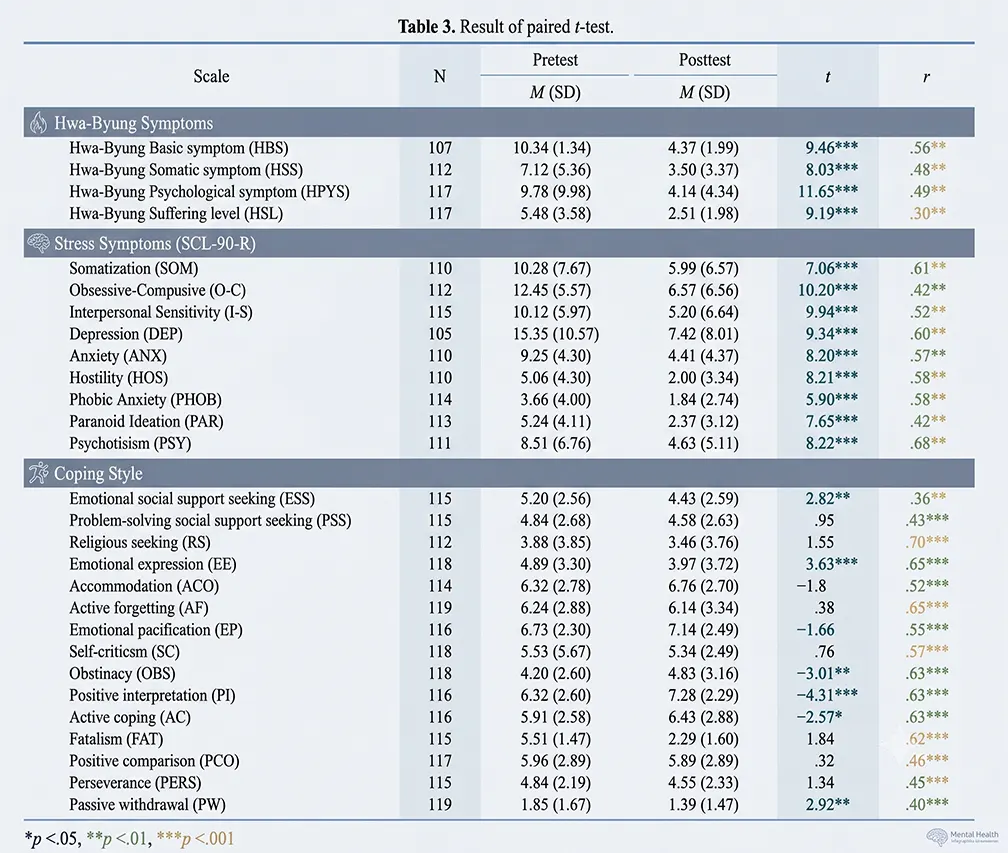
- Hwa-Byung Symptoms: The entire group’s average symptom score significantly decreased across all sub-domains (Basic symptom, Somatic symptom, Psychological symptom, and Suffering level) after one week of meditation.
- Stress Symptoms: The group’s average symptom score significantly decreased across all 9 sub-domains, including Somatization, Depression, Anxiety, and Hostility.
- Negative Coping Styles: Negative coping mechanisms decreased, such as Emotional social support seeking, Emotional expression, and Passive withdrawal.
- Positive Coping Styles: Positive coping mechanisms increased, including Obstinacy (active self-assertion), Positive interpretation, and Active coping.
Judging from these results, it is confirmed that a short, one-week experience of Ma-eum Su-ryun meditation helped not only to reduce stress-related symptoms themselves but also facilitated meaningful changes in coping mechanisms. It demonstrated that cognitive, emotional, and behavioral response patterns that have been formed and habituated over a long lifetime can be changed even with a short period of meditation.
Furthermore, statistical analysis revealed a significantly high correlation between the group’s average score and individual scores, meaning that Ma-eum Su-ryun meditation had a consistently significant effect on all participants, regardless of diverse demographic backgrounds or their individual symptoms and motivations.
✨ Psychological Chief Complaints Resolved After a Week
When classifying and analyzing the subjective feedback of each participant, 85 out of 120 subjects (73.3%) stated that their psychological chief complaints had been resolved.
- Psychological Improvements: Participants reported a reduction in depression, anxiety, fear of the future/failure/death, pressure, burden, worry, and distracting thoughts. They also reported feeling increased concentration, confidence, emotional stability, and peace of mind.
- Physical Improvements: They reported improvements in insomnia, headaches, shoulder/lower back pain, indigestion, chest tightness, brain fog, and bodily heaviness, noting that their heads felt clearer.
- Interpersonal Improvements: They reported developing a sense of preciousness toward their families, resolving resentment, and experiencing self-reflection and repentance for past mistakes.
🕊️ Meditation Protects Modern People’s Health, Happiness, and Confidence
Meditation, once considered merely a mystical Eastern practice, has now established itself as a scientifically researched and practiced stress management method, adopted by world-renowned universities and cutting-edge corporations.
People who steadily practice meditation consistently report positive changes in many aspects of their lives, noting a stronger mind, better sleep, and improved interpersonal relationships. Meditation doesn’t just relieve stress; it restores your relationship with yourself and with others, providing great strength to live a vibrant and happy life.
For a healthier, happier, and more confident you, meditation is an indispensable element in the lives of modern people.
