

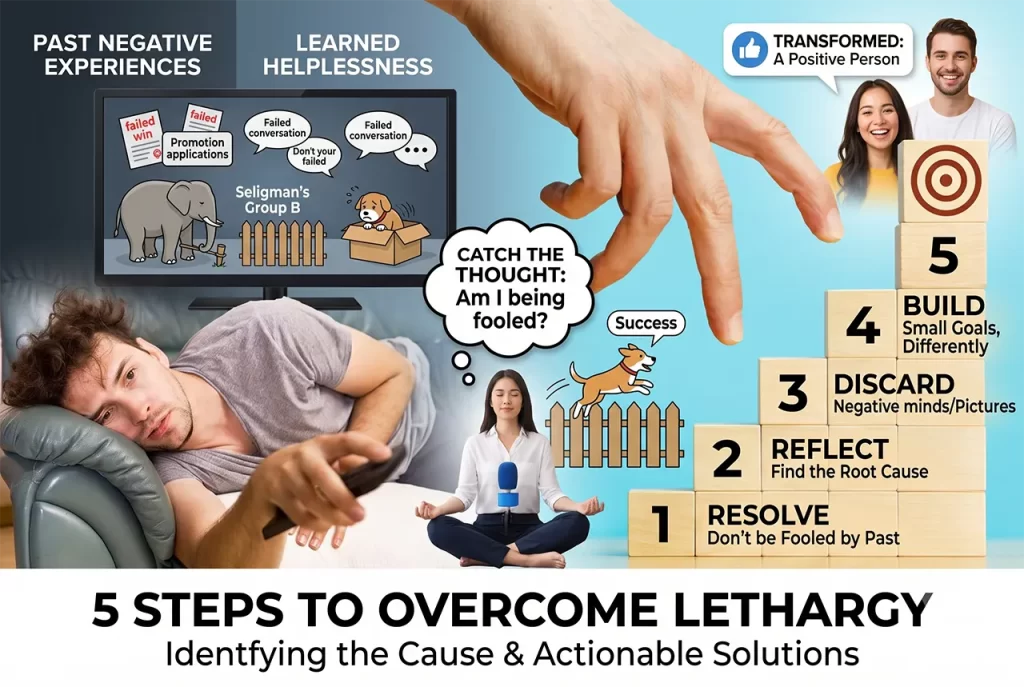
“Sigh, it probably won’t work out even if I try…” 😔
Recently, I had to look back and wonder why I was having these thoughts. (I am a reporter for the Ma-eum Su-ryun blog, haha! ✍️) It was about a month ago when I learned about a promotion where, if you applied and won, you received a product for free. I was interested because it was a product I had always liked, but the application process was complicated, and soon, this thought popped into my mind:
“Will I really win? It probably won’t work out anyway… let’s not waste time and just drop it. It’s too bothersome…” 🤦♀️
Lethargy kicked in immediately. 💤
However, a coworker of mine didn’t find it bothersome and applied for the exact same promotion. I just thought to myself, “Wow, they are amazing, they must not find it annoying.” 👏 But what was the result? A short while later, the moment that expensive product was delivered right to my coworker via parcel service… I shed a tear. 😭 Should I have tried too? Haha.
🔍 Finding the Root of Lethargy in Past Experiences
That day, I went to the meditation center, practiced Ma-eum Su-ryun, and looked back on my day. 🧘♀️ In my daily life, there were actually quite a few moments where I gave up, thinking, “Will it really work? It probably won’t anyway…” 🤷♀️
- Moments where I was about to do something helpful for someone but hesitated, thinking, “Sigh, they probably won’t even like it… forget it… too bothersome.” 🙅♀️
- Moments where I tried to reopen a conversation about a disagreement but gave up, thinking, “Sigh… they won’t bend their stubbornness anyway… it’s too bothersome.” 🤐
Surprisingly, lethargic and negative mindsets had dictated my choices in the moment quite often. Why am I like this? 💭
Looking back, it was because I had mostly experienced negative outcomes in similar situations. No matter how simple the event, I had never won. 🚫 I acted for someone’s sake, only to realize later that they hated it. I tried conversing with someone, but every time it ended with us failing to understand each other. 🌪️
Those experiences piled up, creating a negative mindset of “It won’t work out even if I try…” When faced with specific situations, I had reached a lethargic state of preferring just not to do it at all. 🛑
🐶⚡ Martin Seligman’s Experiment Uncovering ‘Learned Helplessness’
Lethargy stemming from past experiences is professionally termed ‘learned helplessness’. 📉 The person who first discovered this phenomenon is Martin Seligman, known as the founder of positive psychology. 🧠
In 1967, by chance, he conducted an experiment on dogs regarding “pain avoidance behavior,” which marked the beginning of positive psychology. (This experiment was introduced in the 1967 Journal of Experimental Psychology under the title ‘Failure to escape traumatic shock’.) 📖
First, 24 dogs were divided into three groups and placed into different boxes equipped with a floor device that delivered an electric shock:
- Group A (Escape Group): Receives electric shocks, but if they press a prepared button with their nose, the shock turns off. 🔘
- Group B (Inescapable Group): Receives electric shocks, but their bodies are tied up, so no matter how much they struggle, they cannot stop the shock. ⛓️
- Group C (Control Group): A comparison group that receives no electric shocks. 🐕
The Test: After 24 hours, the dogs were moved to a different box with a low fence in the middle and given an electric shock. Anyone who just jumped over that fence could avoid the shock. How did the dogs behave? 🤔
🕊️ Overcoming Lethargy with Ma-eum Su-ryun
The dogs in Group A, who had experienced change when they took action through their own will, all successfully jumped the fence and escaped! 🐾 Group C also jumped the fence and escaped relatively easily.
However, the dogs in Group B, who couldn’t escape the electric shock previously no matter how much they struggled, didn’t even think about jumping the fence. 😢 Out of the 8 dogs in this group, only 2 attempted to escape. They simply crouched in the corner and endured the shock. The past experience of “it won’t work even if I try” was holding them back. 🚧
Is it only dogs that learn helplessness? What about humans? 🧑🤝🧑
Psychologist Donald Hiroto conducted the exact same experiment on humans, and the conclusion was identical. Once humans experience that no amount of effort will work, they also become lethargic afterward. 📉
The urge to give up is created by past experiences of failure, and there is no law stating that because you failed then, you will fail now! 🌟 It simply requires making an effort to create successful experiences starting today.
If you look back, there are surprisingly many moments when learned helplessness kicks in:
- About a person: Sigh, what’s the point of saying it? They won’t listen no matter how much I talk… 🗣️🚫
- About my work: What’s the point of working hard… it won’t yield any results anyway… 📉
- About my company: Our company won’t ever change anyway… I’ll just zone out and go home… 🏢🚶♀️
- About New Year’s resolutions: I failed last year and the year before that, will it really work this year? 📅💔
🪜 The 5 Steps to Overcome the ‘Learned Helplessness’ Formed Within Me
Learned helplessness can block everything—personal achievements, deep human relationships, and professional development. 🧱 If it deepens, a severe slump may arrive. Here are the commonalities of people who overcame lethargy through Ma-eum Su-ryun meditation, broken down into 5 actionable steps! 💪✨
🛑 Step 1: Resolve Not to Be Fooled by Learned Helplessness
When the thought “It probably won’t work anyway~” arises, you must catch it immediately. 🎣 Ask yourself: “Wait… am I being fooled right now?” This is the phase of making up your mind to overcome the hurdle without being tricked by your past experiences (your brain’s old pictures). 🖼️🙅♀️
🔍 Step 2: Reflect on the Experiences That Formed the Helplessness
Adopting a simple positive mindset isn’t enough. You must first look back at why this sense of lethargy formed and figure out the root cause of why you failed back then. Find the exact origin of your learned helplessness. 🕵️♀️
🗑️ Step 3: Discard the Minds That Became the Cause
As you look back on those memories through Ma-eum Su-ryun meditation, you realize something profound: These memories seem real, but they are actually just pictures you took yourself, tailored to your mental world at that time. 📸 Because those pictures are not real, if you actively discard them, they disappear! ✨
🎯 Step 4: Set Small Goals and Approach Differently Than Before
Now is a new beginning! 🌅 If I want to win an event, I need to accurately grasp the host’s intention first and approach it differently than when I failed. If a conversation didn’t work out because I only tried to talk my way, I must now ponder, “How should I speak so they will listen?” 💬 Benchmarking the methods of successful people is a great approach here. 🏆
🌱 Step 5: Build Up Small Experiences of Success
If past experiences of failure drove you into lethargy, it is vital to create small experiences of success. Choose easy goals right from the start! 🎈 If your resolution was to exercise every day but you always failed, set a new goal: Exercise every day for just 3 days. 🏃♀️ After experiencing that one small success, gradually increase your goals. 📈
🐘 The Elephant and the Stake: Do you know about the adult elephant quietly tied to a small stake? It could pull out the stake and enjoy freedom with just a little movement, but because it had been tied there since it was young, it doesn’t even attempt it. However, if it accidentally moved and the stake popped out, it would realize: “Ah… I could do it too!” 🐘🔓
🗣️💖 Stories of People Who Overcame Lethargy Through Ma-eum Su-ryun Meditation
“The cause of depression was in the life I had lived” 🌧️➡️☀️ (Gukhwa / 23 years old, Level 1. Icheon-si, Gyeonggi-do) “After graduating from college, the stress I had received piled up. I, who used to have so much drive, lost my motivation and felt that I had changed from before. I got angry much more frequently, and the depression and lethargy made even going about my daily life difficult. I thought I just needed to think positively, but the depression deepened. In the midst of my struggle, I coincidentally found out about Ma-eum Su-ryun. I came to understand that I was struggling because the pictures of the life I had lived and taken in my mind had piled up. As I discarded them one by one, my mind became comfortable, and as time passed, I could feel myself transforming…” 🦋
“I transformed into a positive person” 🌻✨ (Jin Nam-hae / 37 years old, Level 1. Mokpo, Jeonnam) “Living the past 37 years, I realized I was living without thinking. The older I got, I felt an unknown pressure that I needed to be more equipped, and combined with the physical and mental stress from work, I was living a numb and lethargic life. When I thought I couldn’t go on like this, I remembered a Ma-eum Su-ryun book I had read in high school. I blindly looked it up on the internet, registered, and participated… this small courage brought a huge change to my mind. My life, where I only ever saw the negative and bad things, changed. I felt the bright, clear expressions and minds of the people I spent time with, and I, too, transformed into a positive person along with them.” 🥰
