
📖 INTRODUCTION
Many people spend their lives searching for answers to life’s biggest questions.
Who am I?
Why am I here?
What is the purpose of life?
Despite professional success, education, religion, and personal achievements, these questions often remain unanswered.
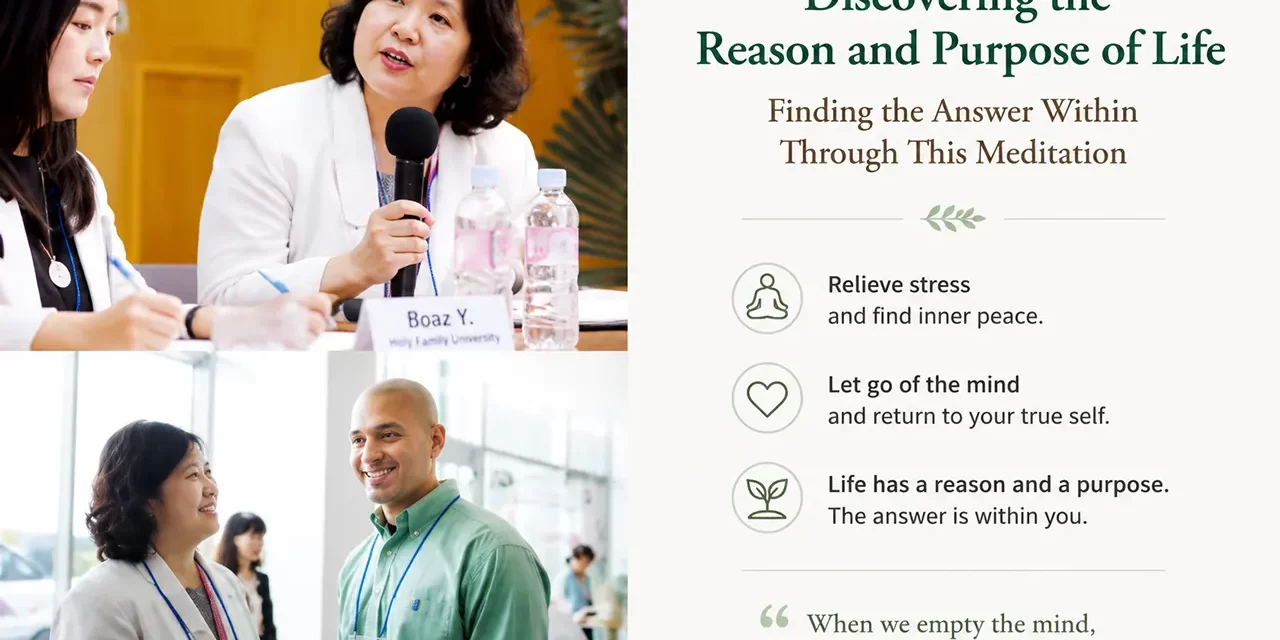
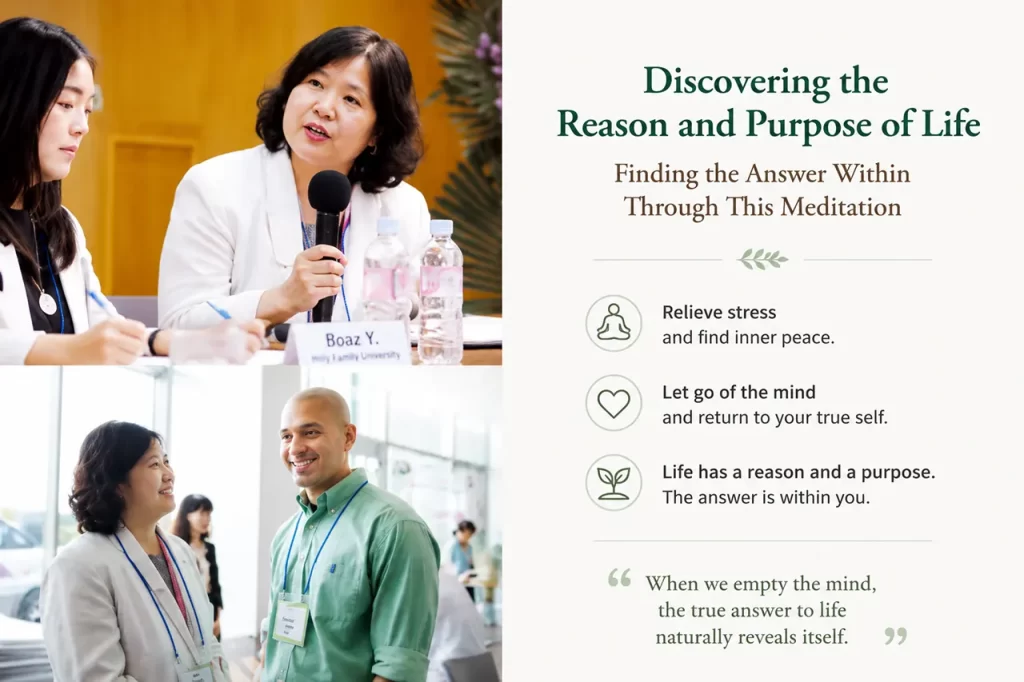
For Boaz Y., Professor of Nursing at Holy Family University in the United States, those questions became deeply personal during one of the most difficult periods of her life.
As a nursing professor, researcher, and educator, she spent years studying human well-being, leadership, caregiving, and stress management. Yet despite her academic background and professional accomplishments, she struggled with emotional pain, family conflict, and a profound sense of emptiness.
Eventually, her search led her to Master Woo Myung’s meditation method.
What began as a personal journey of healing later evolved into academic research exploring the effects of meditation on well-being, vitality, stress reduction, and quality of life.
This meditation testimonial shares how one nursing professor discovered peace, gratitude, and a deeper understanding of life’s purpose—while also researching the measurable benefits of meditation in higher education and healthcare settings.
💬 MEDITATION TESTIMONIAL: “DISCOVERING THE REASON AND PURPOSE OF LIFE”
By Boaz Y. | Professor of Nursing, Holy Family University
🎓 Why I Began Researching Meditation
In May 2013, I traveled to Korea to present research at an international academic conference.
The title of my presentation was:
“The Effect of Ma-Eum Su-Ryun on Power and Well-Being”
The reason I chose this topic was simple.
I personally experienced profound benefits through this meditation.
Because of that experience, I wanted to examine its effects scientifically and objectively.
Together with fellow professors Dr. Kathryn Hayes and Dr. Eagleston, I conducted research involving professors, staff members, and university students.
We established a meditation program at the university and invited participants to practice regularly.
For approximately eighteen months, participants practiced four times per week for thirty minutes per session.
The results were remarkable.
We observed statistically significant improvements in:
- Vitality
- Well-being
- Emotional health
- Overall quality of life
What impressed me most was how quickly students changed.
Even after a relatively short period of practice, many appeared noticeably brighter, healthier, and more positive.
Because stress levels in American society are extremely high, this research generated significant interest at conferences throughout the United States.
Ironically, stress was also what first led me to meditation.
💔 A Personal Crisis Changed Everything
When I was twelve years old, my family immigrated to the United States.
Adjusting to a new country was difficult.
Like many immigrants, I experienced uncertainty, loneliness, and pressure.
Later in life, I encountered even greater challenges.
My marriage became increasingly difficult.
As my husband’s business struggles intensified, so did the stress within our relationship.
Communication broke down.
Arguments became frequent.
Eventually, I felt we could no longer continue living together and suggested divorce.
My husband reacted angrily.
What followed was more than three years of exhausting legal battles.
That period became one of the darkest chapters of my life.
I constantly asked myself:
“I worked so hard to build a good life.”
“Why is this happening to me?”
The more I searched for answers, the more lost I felt.
🔍 Searching Everywhere for Meaning
I turned toward religion.
I traveled.
I practiced different forms of meditation.
I explored Zen practice and various spiritual approaches.
Yet despite all my efforts, the emptiness remained.
Life still felt incomplete.
Then one day, my mother handed me a brochure about this meditation.
As soon as I read it, I felt something different.
For the first time, I encountered a method that provided a clear and practical process.
Most approaches I had studied focused on ideas.
This one offered a path.
I immediately decided to begin practicing.
🌱 Letting Go of the Burdens I Carried
Through meditation, I gradually realized how much of my daily life was controlled by accumulated memories and emotions.
Past disappointments.
Frustrations.
Resentment.
Painful experiences.
All of them continued influencing my thoughts and behavior.
As I followed the method and sincerely reflected on my life, I began letting those burdens go.
Little by little, I experienced something I had not felt in years:
Peace.
Then, around the time I completed Level 1, a profound realization arose naturally:
“Ah… the universe is me.”
The experience filled me with gratitude.
And it led to an even deeper understanding.
✨ Enlightenment Already Exists Within Us
One of the most important realizations I gained was this:
Enlightenment is not something we search for outside ourselves.
It already exists within us.
We spend our lives searching for answers externally.
But when the accumulated mind disappears, our original nature naturally reveals itself.
The answers begin appearing on their own.
That realization transformed how I viewed both life and spirituality.
💙 Seeing Myself Honestly for the First Time
As I continued practicing, I spent many vacations at the main meditation center in Korea.
The deeper I reflected, the more embarrassed I became.
For most of my life, I believed:
“I am a good person.”
As a pastor’s daughter, I always tried to be kind and helpful.
But through meditation, I saw myself more honestly.
I discovered that I often:
- Became self-righteous
- Judged others
- Failed to truly understand people
- Became angry easily
- Blamed others for my suffering
For years, I believed other people caused my stress.
Meditation helped me realize that the real source of suffering existed within my own mind.
That realization changed everything.
🤝 Gratitude Replaced Resentment
One of the most meaningful changes involved my former husband.
For years, I carried resentment toward him.
As I continued letting go, something unexpected happened.
I became able to sincerely apologize.
Even more surprising, I felt genuine gratitude toward him.
My parents were also deeply moved by the changes they saw in me.
They told me my exhausted expression had disappeared.
They said I looked peaceful.
One day, my father even encouraged members of his church to try this meditation.
Hearing that shocked me.
But my parents had witnessed my suffering more closely than anyone else.
Perhaps they saw my transformation most clearly.
👩⚕️ Why This Research Matters
Today, my research continues.
I currently study the effects of meditation among nursing students and healthcare professionals.
These populations experience enormous stress.
Nursing students face intense academic competition.
Healthcare workers regularly care for people who are sick, suffering, and dying.
As a professor, seeing students struggle often breaks my heart.
I sincerely hope this research can provide practical help.
Even if only a little.
🌎 What Caregivers Taught Me About Life
Earlier in my academic career, I completed research involving family caregivers.
I conducted in-depth interviews with individuals caring for loved ones.
The results surprised me.
I expected conversations about:
- Stress
- Burnout
- Responsibility
Instead, nearly everyone arrived at a deeper realization.
Regardless of wealth, education, or accomplishment, people eventually confront the same question:
“What is the meaning of life?”
Watching loved ones grow old, become ill, and decline often causes people to question everything.
And honestly, I understand why.
If life consists only of struggling, aging, becoming sick, and eventually dying, it can easily feel meaningless.
🌟 The Reason and Purpose of Life
Through meditation, I came to believe that human life truly does have a reason and a purpose.
Throughout life, we continually search for answers to questions such as:
- Who am I?
- Where did I come from?
- Where am I going?
- Why am I here?
For me, those answers did not come through intellectual analysis alone.
They appeared when I learned to empty my mind and look honestly within myself.
And that journey continues even today.
🌟 CONCLUSION
Boaz Y.’s story demonstrates that the search for meaning is universal.
Even accomplished professionals, educators, and researchers often struggle with questions about purpose, happiness, suffering, and fulfillment.
Through meditation, she discovered a practical method for letting go of emotional burdens, finding inner peace, and exploring life’s deepest questions.
Her personal transformation eventually inspired scientific research examining meditation’s effects on well-being, vitality, and stress reduction.
This meditation testimonial reminds us that some of life’s most important answers may not be found by searching outward—but by looking deeply within.
Santa Clara Meditation
Helping people discover peace, purpose, gratitude, and true happiness through the meditation method of Master Woo Myung.
