
📖 Introduction
Chronic skin conditions such as atopic dermatitis often affect far more than the skin itself.
Many patients silently suffer not only from physical symptoms like itching, inflammation, and discomfort, but also from emotional wounds, anxiety, stress, depression, loss of confidence, and social isolation.
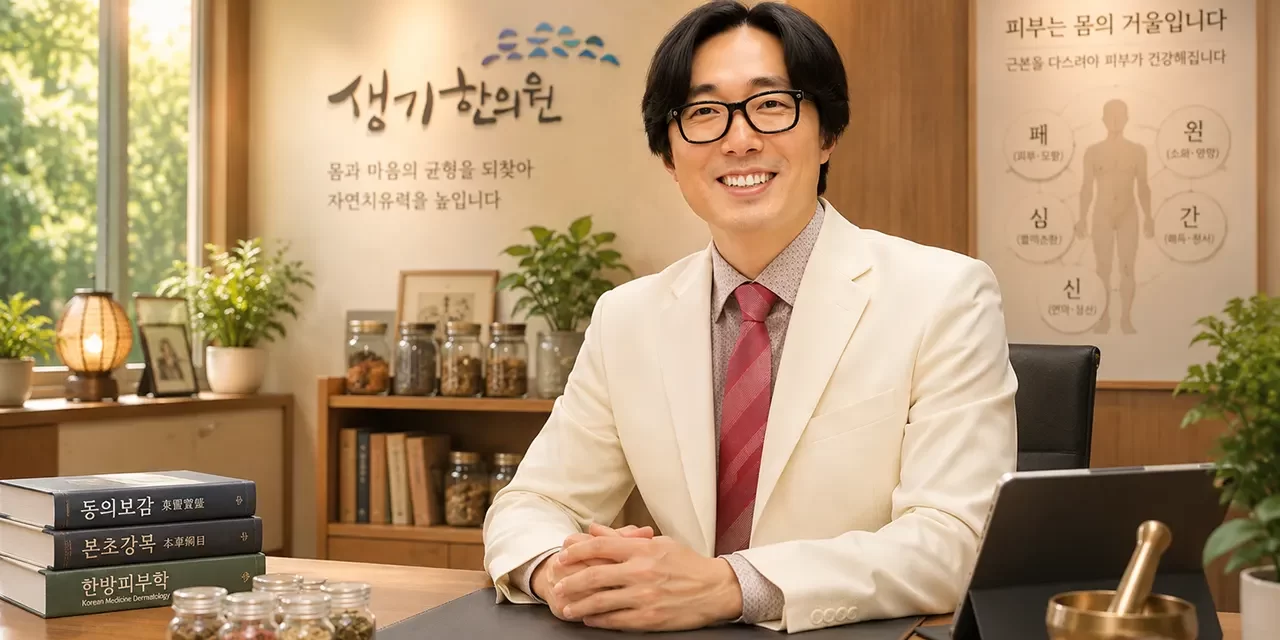
This insightful meditation testimonial shares the perspective of Dr. Chi-young Park, a Korean medicine dermatology specialist who believes true healing must address both the body and the mind.
After treating countless patients with severe skin conditions including atopic dermatitis, psoriasis, seborrheic dermatitis, acne, chronic hives, and other inflammatory skin diseases, he gradually became convinced that emotional stress and unresolved mental burdens play a major role in many chronic illnesses.
Through meditation and deep self-reflection, Dr. Park came to understand the profound principle of “letting go” — not only physically through detoxification and circulation, but emotionally through releasing stress, anger, worry, resentment, and mental burdens carried inside the mind.
He explains that as emotional burdens are released, people naturally regain peace, warmth, hope, emotional balance, and even healthier skin.
This meditation testimonial beautifully explores the connection between emotional healing, stress relief, meditation, holistic wellness, and chronic skin conditions.
💬 Meditation Testimonial: “Letting Go Heals Atopic Dermatitis”
By Chi-young P. | Korean Medicine Dermatology Specialist
🌱 “You Must First Understand the Person”
“How difficult it must have been for you.”
According to Korean medicine dermatologist Dr. Chi-young Park, that is often the very first thing he says to patients.
Rather than focusing only on skin symptoms, he believes it is essential to first understand the person behind the illness:
- How they have lived
- What kind of stress they carry
- What emotional pain they have endured
Because after suffering from chronic skin diseases like atopic dermatitis for many years, patients often develop emotional wounds as well.
Some lose confidence.
Some abandon their dreams.
Others develop depression or severe social anxiety.
🔥 “Atopic Dermatitis Can Be Treated”
Today, atopic dermatitis has become so common in Korea that many call it a “national disease.”
And Dr. Park says the suffering affects entire families — especially parents of young children.
“The itching is often harder to endure than the pain itself.”
Children scratch constantly.
They cry endlessly.
Sometimes they scratch until their entire bodies bleed.
Listening to parents describe those experiences, he says, makes him sincerely want to help them recover.
Unlike conventional Western medicine, which often describes atopic dermatitis as a chronic incurable condition, Dr. Park believes more than 90% of patients can significantly improve.
And according to him, the core principle is simple:
“Removal.”
Or what he calls detoxification therapy.
💧 The Principle of “Removing Toxins”
Dr. Park explains that unhealthy modern lifestyles create inflammation and toxins within the body.
The goal of treatment is to help the body naturally release those accumulated toxins — especially through sweating.
His treatment approach combines:
- Herbal medicine
- Bath therapy
- Exercise
- Dietary changes
He often recommends full-body bowing exercises as well.
Even thirty minutes of repetitive bowing can induce sweating, help release toxins, calm the mind, and reduce stress.
🌿 “The Skin Reflects the State of the Body”
In traditional Korean medicine, the skin is viewed as a mirror reflecting the condition of internal organs.
Dr. Park references an old medical principle from the Dongui Bogam:
“The lungs govern the skin and hair.”
From that perspective, atopic dermatitis is understood as a systemic imbalance centered around the lungs and respiratory system.
Therefore, treatment focuses not only on the skin itself but also on restoring balance throughout the body and improving circulation and organ function.
⚠️ Emotional Stress Also Becomes Inflammation
Dr. Park emphasizes that emotional stress plays a major role in many skin conditions.
In Korean, the word for inflammation (염증) includes the character for “fire” repeated twice.
He explains:
“When people become angry, anxious, or emotionally overwhelmed, their faces become red and heated.”
Stress, tension, anger, depression, worry, and resentment can block circulation and disturb the body’s energy flow.
Eventually, those internal imbalances may appear outwardly through the skin.
That is why people under chronic stress often develop dull or unhealthy-looking skin.
According to Dr. Park, true healing requires both:
- Removing physical toxins
- Releasing emotional stress
🌌 Discovering the Principle of “Letting Go”
Dr. Park says he began understanding this principle deeply through meditation practice during his second year of Korean medicine school.
The idea that deeply resonated with him was simple:
“If accumulated mental burdens are removed, one’s original nature naturally appears.”
In traditional East Asian medicine, humans are often described as “small universes.”
Through meditation, he says he came to personally experience and understand that concept.
And once he did, Korean medicine itself suddenly became much easier for him to understand.
Later, during his public health service years, he met a Korean medicine doctor with exceptional expertise in severe skin disorders.
The treatment philosophy again centered around the same idea:
- Removal
- Detoxification
- Letting go
Because he had already deeply understood the principle of “letting go” through meditation, the medical approach resonated with him immediately.
✨ “Every Skin Disease Improves Through Letting Go”
After opening his clinic, he treated countless patients with severe conditions:
- Atopic dermatitis
- Psoriasis
- Seborrheic dermatitis
- Chronic hives
- Acne
And through years of experience, he became even more convinced that the core healing principle behind many skin diseases is fundamentally connected to “letting go.”
❤️ Giving Patients Hope Again
What he feels most grateful for is not simply healing skin disease.
It is helping people regain hope in life itself.
He recalls one memorable patient:
A young woman whose atopic dermatitis had been so severe that she had never even dated.
After trying countless treatments unsuccessfully, she visited his clinic as a final attempt.
She consistently followed treatment for about a year and eventually recovered.
Her biggest dream, he says, had always been to experience love.
Then one day, she sent him a wedding invitation.
“That made me truly happy.”
🎄 Treating Patients With Warmth
One day during treatment, a patient unexpectedly asked him:
“Doctor, are you happy?”
Caught off guard, he instinctively answered:
“Yes. I honestly don’t think I need anything more.”
The patient later explained:
“You always seem genuinely happy, so I wanted to ask.”
Even today, Dr. Park constantly reflects on himself:
- “Did I truly do my best for each patient today?”
- “Did I treat each person with care?”
- “Am I losing my original sincerity?”
When frightened children come into the clinic, he sometimes removes his white doctor’s coat and treats them casually in the waiting room instead.
During Christmas season, he even dresses as Santa Claus to make young patients feel more comfortable.
Because for him, healing is not only about curing skin.
It is also about comforting hearts.
