
📖 Introduction
Many students today silently struggle with emotional wounds, loneliness, stress, anxiety, bullying, pressure from school, family conflict, emotional overload, and difficulty expressing their true feelings.
At the same time, teachers themselves often carry emotional exhaustion, perfectionism, stress, insecurity, and pressure while trying to guide students.
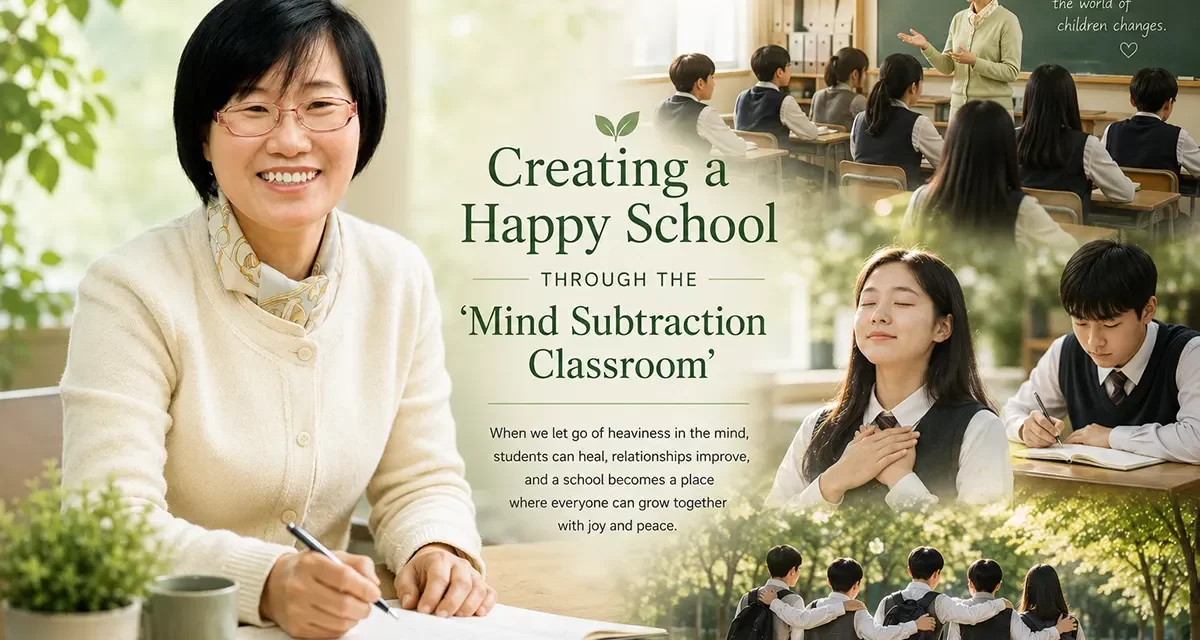
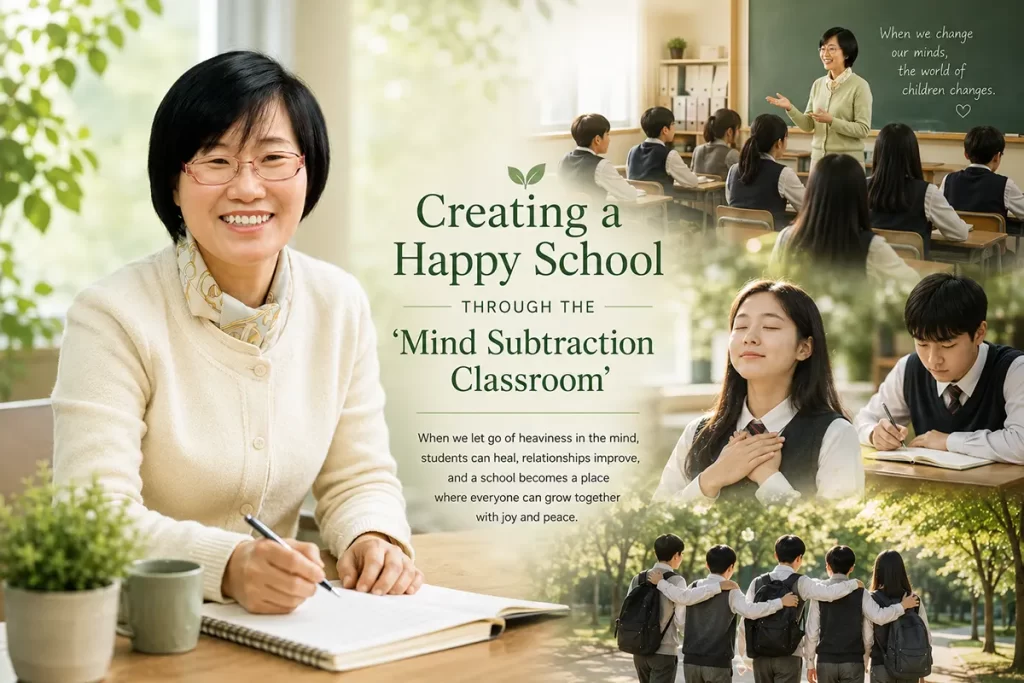
This deeply inspiring meditation testimonial shares the story of Yeon Hee J., a teacher at Jeodong Middle School in Goyang, who helped create a safer and happier school environment through a classroom program centered around meditation and “mind subtraction.”
After personally experiencing emotional healing and inner transformation through meditation, she began helping students reflect on painful memories, emotional wounds, fear, anger, loneliness, and insecurity.
The results were remarkable:
- Bullying decreased
- Students became emotionally brighter
- Relationships improved
- And the school atmosphere itself gradually transformed
This meditation testimonial beautifully explores emotional healing, school violence prevention, teen mental health, bullying recovery, teacher burnout, emotional awareness, self-reflection, compassion, and creating healthier school environments through meditation.
💬 Meditation Testimonial: “Creating a Happy School Through the ‘Mind Subtraction Classroom’”
By Yeon Hee J. | Teacher at Jeodong Middle School
🌱 A School Recognized for Preventing Violence
Known as a school with little violence, Jeodong Middle School in Goyang gained national attention in 2012 after receiving recognition from the Korean Ministry of Education for its outstanding school violence prevention efforts.
The school was also featured by EBS and other media outlets.
At the center of those efforts was teacher Yeon Hee Jung.
After personally experiencing major changes in her own life through meditation and “mind subtraction,” she created a classroom program designed to help students:
- Reflect on themselves
- Release painful memories
- Grow with brighter minds
The effects were remarkable.
Students began changing.
Bullying decreased.
And the school gradually became a happier place for both students and teachers.
📓 “Notebooks Filled With Painful Memories”
Before class begins, students spend five quiet minutes reflecting on emotions and memories they want to release.
Teacher Jung gently guides them:
“Close your eyes.”
“Think about the thoughts and memories that hurt you…”
Although many students appear cheerful externally, their notebooks quickly fill with painful memories such as:
- “When my friend abandoned me.”
- “When my father beat me severely.”
- “Fear of exams.”
- “Memories from first year middle school I never want to think about again.”
Many students had never shared these emotional wounds with anyone before — not even parents or close friends.
But after expressing and letting go of those emotions, students often say:
- “I don’t feel angry or sad anymore.”
- “It feels like something heavy left my body.”
- “I feel refreshed and lighter.”
And almost immediately, their faces become noticeably brighter.
⚠️ Why So Many Students Feel Emotionally Overwhelmed
Teacher Jung explains that modern students absorb enormous amounts of stimulation from:
- Smartphones
- Internet games
- Social media
- Digital media
from a very young age.
As a result, many students struggle with:
- Emotional overload
- Restlessness
- Attention problems
- Impulsiveness
- Aggression
- Loneliness
Even while sitting in class, their minds constantly wander.
Many students feel there is nobody who truly understands the complicated emotions inside them.
Each person becomes trapped inside their own mental world.
Even conversations between friends often become situations where both people are simply expressing themselves without truly listening to one another.
🌧️ “Bullying Often Begins From Small Misunderstandings”
Teacher Jung believes bullying often begins from very small misunderstandings:
- A facial expression
- A short comment
- A passing interaction interpreted negatively
Students store emotional “snapshots” inside their minds and later believe those interpretations as objective truth.
Helping students release those painful mental images, she says, is one of the foundations of preventing school violence.
Because of this belief, students involved in school problems were not only punished.
Instead, they participated in:
- One hour daily of mind subtraction activities
- Volunteer service work
As students gradually released violent, resentful, and negative emotions, many began expressing gratitude and emotional relief.
Witnessing those changes made Teacher Jung want to share the practice with even more students.
💔 “I Was Also Carrying Deep Emotional Pain”
Teacher Jung herself carried painful emotional wounds from childhood.
Her mother passed away when she was twelve years old.
Growing up under strict older siblings left her constantly fearful and emotionally tense.
One memory especially remained deeply imprinted:
Being harshly scolded by her older sister with coal tongs while doing chores.
That fear quietly became the root of much of her insecurity.
During art classes as a child, she constantly used black colors in her drawings.
Over time, she developed:
- Perfectionism
- Intense self-consciousness
- Fear of mistakes
- Constant comparison with others
Even after becoming a teacher, she demanded perfection from students:
- Grades had to be excellent
- Classrooms had to be spotless
- Behavior had to be perfect
Students who failed expectations were often kept after school and repeatedly scolded.
Every new semester she promised herself:
“This year I won’t yell at the students.”
But emotionally, she still could not grow close to them.
Her stress became so overwhelming that every vacation she needed restorative medicine simply to recover physically.
✨ “Now I Finally Feel Like I Can Live”
Eventually, through a recommendation from an acquaintance, she encountered meditation during a school break.
After about three weeks, she naturally found herself saying:
“Now I finally feel like I can live.”
For the first time, she experienced the freedom of viewing people comfortably and without fear.
Through repeatedly letting go of:
- Insecurity
- Inferiority
- Self-consciousness
- Fear
- Emotional pain
her perspective gradually changed.
Even her own child later told her:
“The memories of Mom and Dad fighting always stayed inside me.”
“I was always nervous around you too.”
“But after letting go of those memories, I finally feel like I can breathe.”
Those words deeply moved her.
🌿 “Now I See Students Beyond Their Labels”
As she continued practicing meditation together with her child, Teacher Jung realized that so-called “problem students” could never be understood simply through behavior alone.
Students who caused trouble also carried hidden:
- Pain
- Fear
- Anger
- Loneliness
- Emotional wounds
Instead of responding with prejudice or resentment, she began sincerely helping students release those emotions.
Even school events changed.
Previously, she tried controlling everything herself because she did not trust others.
Now, she enjoys:
- Collaborating with fellow teachers
- Working together with students
- Growing through the process itself
Today, she says her greatest joy is watching students gradually free themselves from painful emotional wounds and become brighter and happier human beings.
🌸 “Building a Truly Happy School”
Teacher Jung believes students need consistent opportunities during adolescence to emotionally reflect on themselves.
She hopes schools can become places where:
- Teachers embrace students with broader understanding
- Students learn to care for and respect one another
- Everyone grows together emotionally
For her, there is no greater happiness than seeing children gradually heal, smile more brightly, and grow into happier human beings.
