
🌿 INTRODUCTION
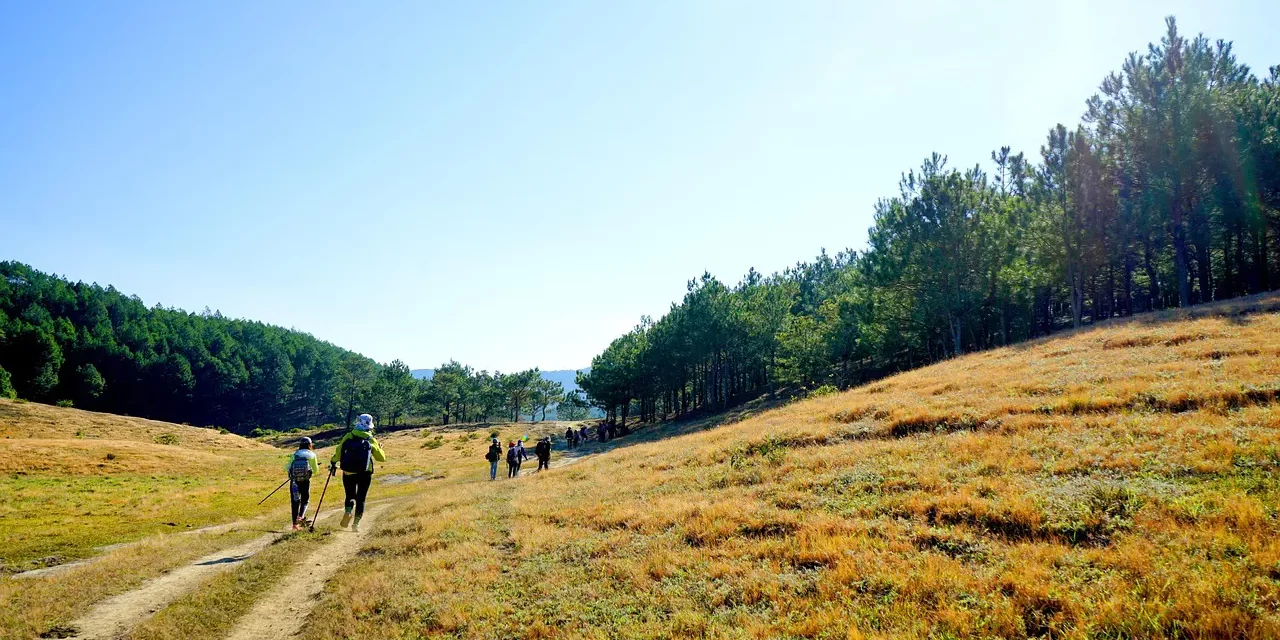
In “A Walk,” Master Woo Myung reflects on the quiet passing of life and the transient nature of the human world. Through gentle scenes—flowers trembling in dew, old and young passing on a riverside path—he meditates on time, aging, and the absence of self.
The poem expresses deep humility: no desire for acknowledgment, no need for glory. Instead, only the sincere wish for Truth to shine so that all people may awaken and live in Heaven while still alive. In this stillness, the poem reveals animitta (signlessness) and nimitta (the sign) as not two but one—showing that the path of Truth is beyond distinction, simply lived.
It is a quiet yet powerful reminder that when one becomes the origin, life is lived without striving: only walking on, with a heart that embraces all. 🌌
📜 ORIGINAL WRITING BY MASTER WOO MYUNG
A Walk
How delicate they are,
these asters that are in bloom alongside the road.
They tremble miserably because of cold dew.
In spring and summer there are
the utterly empty dreams of wants and changes,
but these dreams have all disappeared somewhere.
As I walk on, all that remains is
the hollowness in my mind.
The overgrown weeds near
the stream where I used to live
have all been bulldozed.
On the Joong-dong Bridge, along the dam,
I walk on.
The young and the old come and go.
I look into their faces.
It seems the old are not physically well,
while the young seem healthy.
The young run hard;
though they are young at heart,
the old can only walk.
I watch the all people go to and fro along the dam,
and I think how in ten years’ time, twenty years’ time,
they will no longer be here.
I lower my head without a word
as I walk on humming a sad tune.
I try running,
but I find I am too heavy to run too far.
As I think about how I am aging pointlessly,
I stop running and just walk.
It is no matter if I were to disappear
at this very moment.
My mind has changed;
amidst this, I worry about
how many people will be able to
become like me while I am still alive.
I walk on humming a sad tune.
Though they see me, many people pass me by
not knowing who I am.
There is no glory for me;
I have no expectations.
It is alright if I am not acknowledged.
But if the day were to come when
all glory were to be to ‘dō (Truth)’
and everyone were to see that glory,
I would have no worries;
I would be able to depart without regrets or wishes.
In animitta, nimitta exists.
Nimitta is animitta.
My nimitta is animitta, as well as the source;
so I simply walk on, reaffirming to myself that
while I am still alive now as nimitta,
it is my duty to save the people of this world
and have them live in Heaven.
But as I do this,
I realize that I am different from others,
for there is nothing in my mind
regarding these intentions.
— Woo Myung
🌱 REFLECT AT SANTA CLARA MEDITATION
This poem shows that even while living in the world, one can walk with a mind free of self, holding only the quiet purpose of guiding others toward Heaven.
Aging, time, and impermanence are seen without sorrow, because when Truth becomes one’s mind, there is no attachment and no regret. Whether people recognize him or not does not matter—only that they awaken to dō, the great Truth.
To live like this is to live fully in the present, without desires, expectations, or lingering mind. It is simply to walk on.
