
📖 Introduction
Many teenagers involved in school violence, runaway behavior, theft, bullying, and emotional instability are often carrying deep emotional wounds long before anyone notices their behavior externally.
Broken homes, neglect, family conflict, emotional abandonment, bullying, and fear can gradually shape the way children see themselves and the world around them.
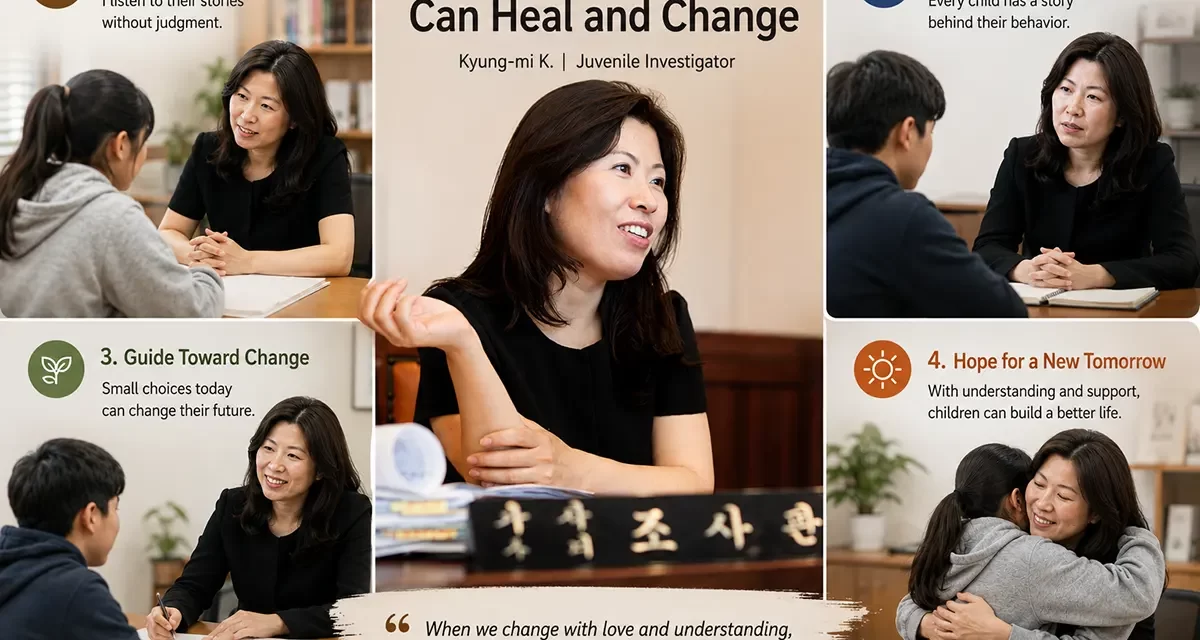
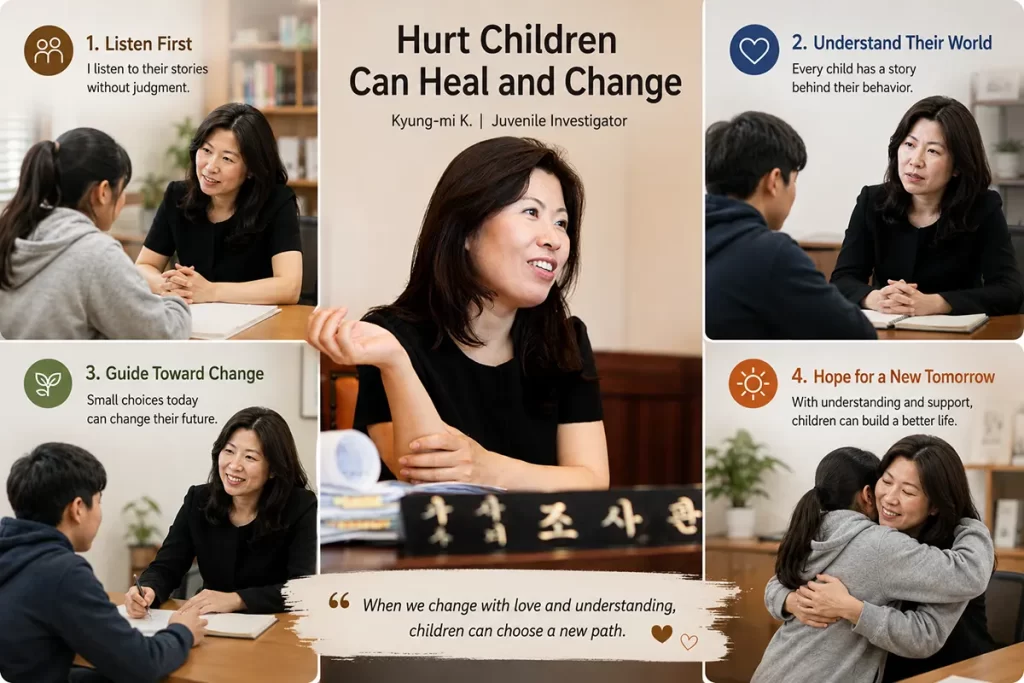
This meditation testimonial shares the story of Kyung-mi K., a juvenile investigator at the Incheon District Court who has spent years working with teenagers involved in juvenile offenses and emotional crises.
Through meeting countless children struggling with anger, anxiety, aggression, isolation, and emotional pain, she gradually realized something important:
To truly help others heal emotionally, one’s own mind must first become peaceful, compassionate, and free from judgment.
Through meditation and deep self-reflection, she learned how to let go of pride, judgment, emotional reactions, and self-centered thinking. As her perspective changed, her ability to genuinely listen to and understand struggling children transformed completely.
This meditation testimonial beautifully illustrates how empathy, emotional healing, self-reflection, compassion, and sincere listening can help wounded children rediscover hope and make healthier choices in life.
💬 Meditation Testimonial: “Children Who Were Hurt — Let’s Make a Different Choice Now”
By Kyung-mi K. | Juvenile Investigator at the Incheon District Court
🌧️ Working With Children Carrying Deep Emotional Wounds
Kyung-mi works as a juvenile investigator at the Incheon District Court.
Since 2002, she has worked with teenagers involved in:
- School violence
- Theft
- Runaway cases
- Other juvenile offenses
Her role is not simply to investigate them.
She meets the children personally, listens to their stories, evaluates their situations, and submits recommendations to judges.
When necessary, she also helps connect them to counseling or psychiatric treatment programs.
But over the years, she realized something important:
“If I truly want to help these children, my own mind must first remain peaceful and positive.”
That is why she says she practices daily self-reflection and “letting go” meditation.
🌊 “The Girl Swore in Every Sentence”
One teenager especially stayed in her memory.
A second-year middle school girl had been sent to court after cursing at teachers and repeatedly running away from home.
When they first met, the girl used profanity almost nonstop.
“Every sentence contained swearing.
It was impossible to even have a conversation.”
Kyung-mi decided the girl first needed emotional stability, so they met again three weeks later.
And gradually, the truth emerged.
The child had grown up watching her parents fight violently during their divorce.
Afterward, she lived mostly alone because her mother constantly worked outside the home.
At school, she was bullied and isolated.
Over time, the girl unconsciously learned one survival strategy:
“If I curse first, I can protect myself.”
So whenever she sensed danger or emotional pain, swearing came out automatically.
💧 “Why Am I the Only One Being Punished?”
Eventually Kyung-mi explained to the girl that because of her actions, she would likely be sent to a juvenile facility.
The girl burst into tears.
“Why am I the only one being sent away?
The kids who bullied me aren’t going.
My parents who fought every day aren’t going.
The teachers who never understood me aren’t going.
Why only me?”
Kyung-mi says hearing those words broke her heart.
Because behind the anger was simply a wounded child crying out at the world.
She replied gently:
“I do not know your parents.
I do not know the students who bullied you.
I do not know your teachers.
But the person standing in front of me right now is you.
And you are the one I can help.
If we work together, things really can become better.”
🌿 “Most of These Children Believe the World Is Unsafe”
According to Kyung-mi, many of the teenagers who come through juvenile court share similar wounds:
- Broken homes
- Neglect
- Violence
- Bullying
- Emotional abandonment
As a result, many children grow up believing:
- “People cannot be trusted.”
- “The world is dangerous.”
- “I must protect myself first.”
Kyung-mi says that before she began meditation and self-reflection, meeting these children often left her feeling only sadness and helplessness.
Now, however, she tells them something different:
“The world itself is not terrible.
The world you experienced was painful.
But if you change, you will discover how warm and good the world can actually be.”
🌸 Learning How to Truly Listen
Kyung-mi says the most important part of her work is listening.
Not judging.
Not lecturing immediately.
Simply listening deeply and reflecting the child’s emotions back honestly.
Many children soften for the first time simply because someone finally tries to understand them.
“Most of these children have spent their entire lives being scolded, criticized, or rejected.”
But she admits this was not easy at first.
Although she studied counseling and genuinely liked helping people, internally she constantly judged others through her own standards.
Even while pretending to understand, her mind quietly thought:
- “That behavior is wrong.”
- “That child should not act that way.”
She realized the limits of her own emotional “container.”
✨ “The Best Healing for the Mind Is Letting Go”
During graduate school, one of her psychiatry professors suddenly appeared noticeably brighter and happier than before.
The professor told students:
“This meditation may heal the mind faster than many other therapeutic methods.”
That statement deeply impacted Kyung-mi, and she decided to begin practicing meditation herself.
As she reflected on her own life, she says she cried often.
She realized:
- How strongly she had believed she alone was right
- How much ego, pride, and self-centeredness she had carried
And then one day, during deeper meditation practice, she experienced something profound.
“It felt as though the old ‘me’ disappeared.
I felt one with the wind, the birds, and everything around me.”
She says that moment completely changed how she viewed people.
☀️ “Children Can Change”
Afterward, her perspective toward juvenile offenders transformed.
Instead of labeling them as “bad kids,” she began seeing them as children shaped by painful environments and accumulated emotional wounds.
She explains:
“Children are heavily influenced by the environments they grow up in.
If they only experience fighting, bullying, fear, or neglect, they begin believing that is the whole world.”
And because of that, they sometimes make destructive choices.
But she believes children can change surprisingly quickly if someone genuinely helps them reflect on themselves and understand others.
She often tells them:
“People live by making choices.
Until now, many of your choices harmed yourself and others.
But from now on, let’s try making different choices.”
🌈 “The Most Meaningful Moment”
Kyung-mi says the happiest moments in her work happen later.
Sometimes parents or teachers call her afterward and say:
“The child’s eyes completely changed after returning from court.”
Those moments move her deeply.
She compares it to spring arriving on frozen ground.
“Warm acceptance can melt even the coldest heart.”
🌱 “I Hope We Raise Children Together Again”
At the end, Kyung-mi reflects on how communities once raised children collectively.
In earlier generations, adults treated neighborhood children as:
“our children,”
not just:
“someone else’s child.”
They corrected them, encouraged them, and cared for them together.
She hopes society can rediscover that spirit again.
“I hope we can let go of the mindset that only my own child matters.
I hope we become a society that cares for all children together.”
